
Dr. June led Worship:
Oh Little Town of Bethlehem & Joy to the World
Jeremy Camp - O Little Town Of Bethlehem (Lyric Video)
Events Coming Up at GOEM:


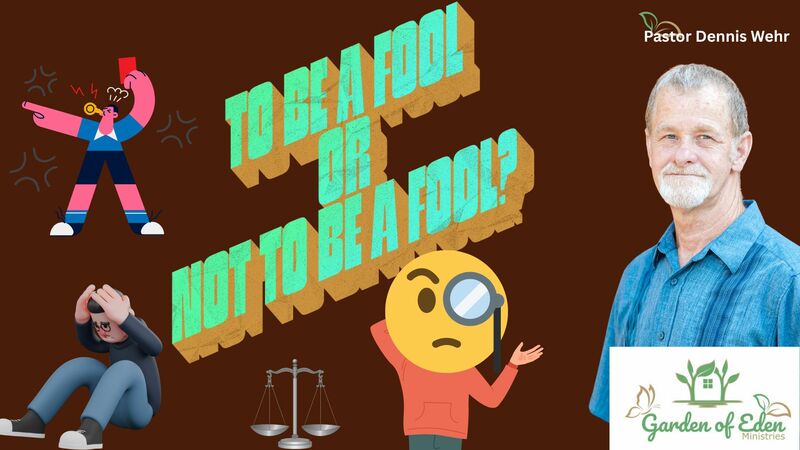
PASTOR'S SERMON
"To be a Fool or Not to be a Fool" explores the choice between wisdom and foolishness, often framed by the biblical Book of Proverbs, contrasting the prideful, unteachable fool who despises instruction with a wise person who seeks knowledge, acknowledges their own limitations, and learns from experience, with verses like Proverbs 26:4-5 advising not to answer a fool in his own way to avoid becoming like him, but to answer him in some cases so he doesn't think he's wise. It's about self-awareness, humility, and discerning when to engage in debate versus when to disengage to protect yourself from pointless arguments or further error.
In essence, the biblical fool is defined by their moral and spiritual rebellion against God, making foolish choices that lead to their own downfall.
Foolish people do not take heed, take hold, they do not grasp the Holy Spirit in their life. Are they doing everything in vain?
Blessed are the pure of heart for they shall see God! Matthew 5:8
If you are angry with someone without a cause, you are in danger of Hell and judgment. We have either a righteous angry but with a heart to forgive. We must discipline ourselves not to be foolish. We step back and think about it. Consider your ways.
The Foolish Path (What to Avoid)
-
Despises wisdom: Fools hate instruction and correction.
-
Stubborn & Proud: They trust their own hearts and won't listen to advice.
-
Impulsive & Loud: They speak without thinking, spread slander, and can't control emotions.
-
Unteachable: They repeat the same mistakes and aren't open to growth.
The Wise Path (What to Embrace)
-
Seeks wisdom: Values knowledge and understands its importance.
-
Humble: Recognizes their own fallibility and is open to self-assessment.
-
Self-aware: Can see their own flaws and doesn't get caught in echo chambers.
-
Observant: Willing to learn and see things objectively without immediate judgment.
How to Decide: Proverbs 26:4-5
-
Don't answer a fool according to his folly: Engaging on their level drags you down and makes you look foolish too.
-
Do answer a fool so he isn't wise in his own eyes: Sometimes you need to challenge foolishness to prevent the fool (or others) from thinking their nonsense is valid, but do it strategically, not by mimicking their foolishness.
In essence, it's a call to
-
Choose wisdom over stubbornness.
-
Know when to speak and when to stay silent.
-
Protect yourself from harmful arguments.
-
Be humble enough to learn and wise enough to teach when necessary.
Ecclesiastes 10:1Dead flies cause the ointment of the apothecary to send forth a stinking savour: so doth a little folly him that is in reputation for wisdom and honour.
2A wise man's heart is at his right hand; but a fool's heart at his left.
3Yea also, when he that is a fool walketh by the way, his wisdom faileth him, and he saith to every one that he is a fool.
4If the spirit of the ruler rise up against thee, leave not thy place; for yielding pacifieth great offences.
5There is an evil which I have seen under the sun, as an error which proceedeth from the ruler:
6Folly is set in great dignity, and the rich sit in low place.
7I have seen servants upon horses, and princes walking as servants upon the earth.
8He that diggeth a pit shall fall into it; and whoso breaketh an hedge, a serpent shall bite him.
9Whoso removeth stones shall be hurt therewith; and he that cleaveth wood shall be endangered thereby.
10If the iron be blunt, and he do not whet the edge, then must he put to more strength: but wisdom is profitable to direct.
11Surely the serpent will bite without enchantment; and a babbler is no better.
12The words of a wise man's mouth are gracious; but the lips of a fool will swallow up himself.
13The beginning of the words of his mouth is foolishness: and the end of his talk is mischievous madness.
14A fool also is full of words: a man cannot tell what shall be; and what shall be after him, who can tell him?
15The labour of the foolish wearieth every one of them, because he knoweth not how to go to the city.
16Woe to thee, O land, when thy king is a child, and thy princes eat in the morning!
17Blessed art thou, O land, when thy king is the son of nobles, and thy princes eat in due season, for strength, and not for drunkenness!
18By much slothfulness the building decayeth; and through idleness of the hands the house droppeth through.
19A feast is made for laughter, and wine maketh merry: but money answereth all things.
20Curse not the king, no not in thy thought; and curse not the rich in thy bedchamber: for a bird of the air shall carry the voice, and that which hath wings shall tell the matter.
Be careful when you call someone a fool. The Bible tells us not to do this. It's silliness...emptiness...thickheadiness...senselessness...heedlessness...self-confidence...in stupidity...folly...a weak or absurd act.
fool1
/fo͞ol/
-
"what a fool I was to do this"verb
adjective
informal
foolish; silly.
In the Bible, a "fool" isn't just someone unintelligent, but primarily a person who rejects God, despises wisdom, and acts contrary to divine instruction, leading to destructive, reckless behavior and spiritual ruin; they hate knowledge, mock sin, refuse correction, and prioritize their own opinions over God's truth, often repeating their mistakes. Key traits include arrogance, a rebellious tongue, lack of planning, and a general disregard for God's ways, as seen in Proverbs.
Key Characteristics of a Biblical Fool:
-
Rejects God:The ultimate fool denies God's existence or lives as if He doesn't matter (Psalm 14:1).
-
Hates Wisdom & Instruction:They despise correction from parents, teachers, or God, and have no desire for understanding (Proverbs 1:7, 15:5).
-
Expresses Opinions Recklessly:They take no pleasure in understanding but love to voice their own, often foolish, opinions (Proverbs 18:2).
-
Acts Impulsively & Sinfully:They are reckless, careless, quick to anger, and mock sin (Proverbs 14:16, 14:9, 12:16).
-
Repeats Mistakes:Their folly is often characterized by a cycle of repeating errors (Proverbs 26:11).
-
Arrogant & Deceitful:They are full of pride, dishonest, and their speech is often empty and harmful (Proverbs 14:3, 14:8).
Biblical Context:
-
Proverbs:This book heavily contrasts the wise person (who fears the Lord) with the fool (who scorns wisdom).
-
New Testament:Jesus warns against calling a brother "fool" (using the Aramaic raca), equating it to cursing and expressing contempt for their eternal worth, a judgment only God has the right to make (Matthew 5:22).


